The Market Leader in IBC Solutions

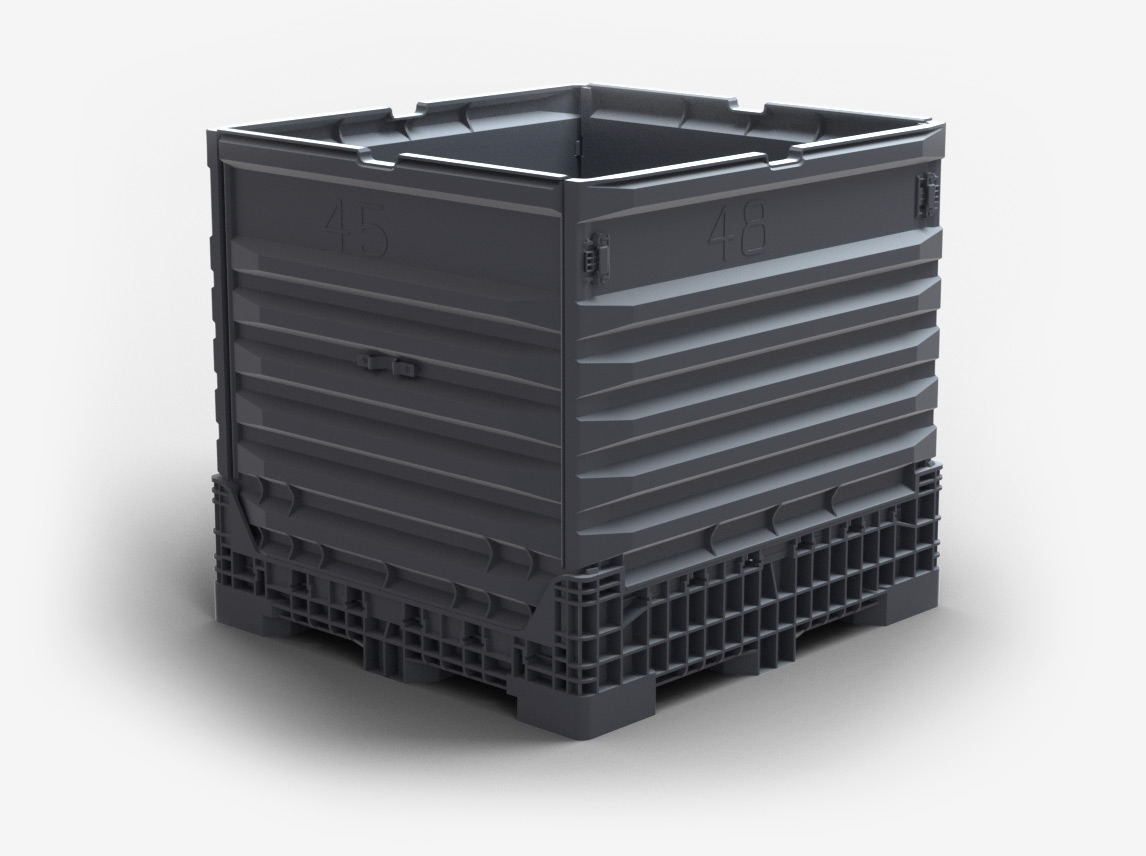
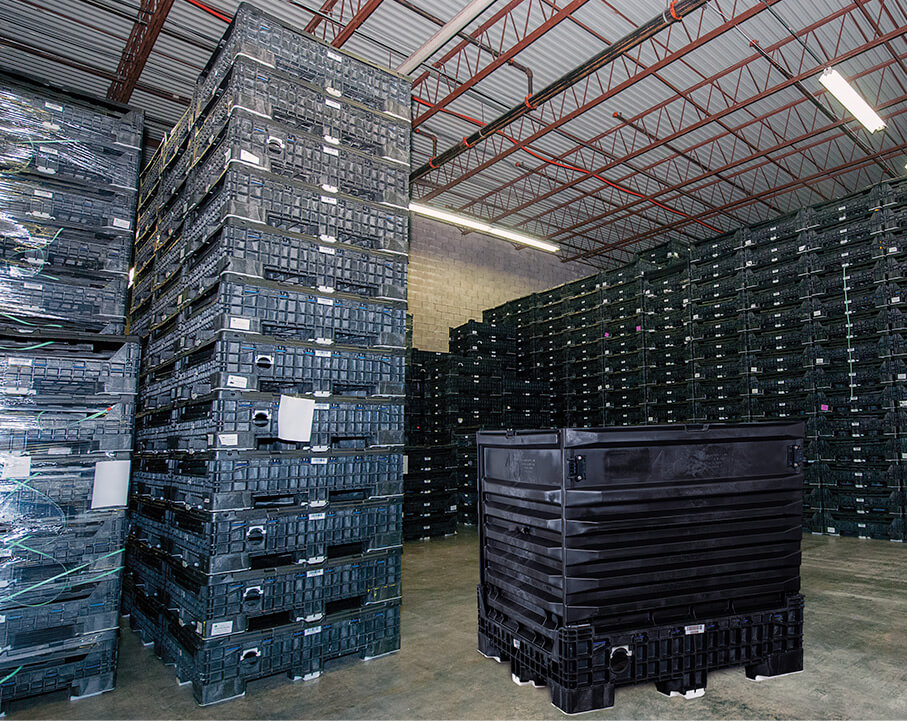
The Arena 330™ System starts with our A330 Shipper™ tote, which is the foundation to build upon with a full assortment of liquid liner bags, valves, and accessories. The extreme durability of the A330 will withstand the rigors of transportation to meet or exceed the hygiene and quality control standards of any food, beverage, non-hazardous chemical, home or personal care manufacturer. A330 shippers are available for sale or lease.

IBC Main Image
Icon - Thumbs Up

Versatility

Liquid liners are available in a variety of styles which can be customized to clients specific packaging, filling, and discharge operations. Barrier films that protect against moisture, oxygen, environmental contaminants, and/or UV light can also be added.

Icon - Economic Benefits

Cost Reduction

Arena Products offers customized, convenient, and cost effective pooling and logistics programs.

Icon - Eco

Green Initiatives

The Arena 330 Shipper System lasts up to 10 years with minimal cleaning and reconditioning required. Concierge IBC Pooling & Logistics services reduce labor, costs, and waste.

A330 Tote Feature 5
Single Operator Can Easily Lift The Lid
Snap Fit Secures Lid and Walls Without Tools
All Plastic Resin Design is Strong and Safe
Skid Pads Make Sliding an Empty Tote Easy
4-Way Forklift Entry for Easy Handling

A Superior IBC Designed for function and economy

  • Holds up to 3,000 lbs liquid / 3,500 lbs bulk solid
  • Made of lightweight, durable, noncorrosive thermoplastic – greater strength-to-weight ratio than steel
  • Reusable, recyclable, easy to clean & maintain
  • 4-way forklift entry
  • Bag-in box system can accommodate hot, cold, or aseptic filling & discharge
  • Snap on cover protects against contamination
  • Replaceable skid pads
  • Setup and knock down in under 30 seconds

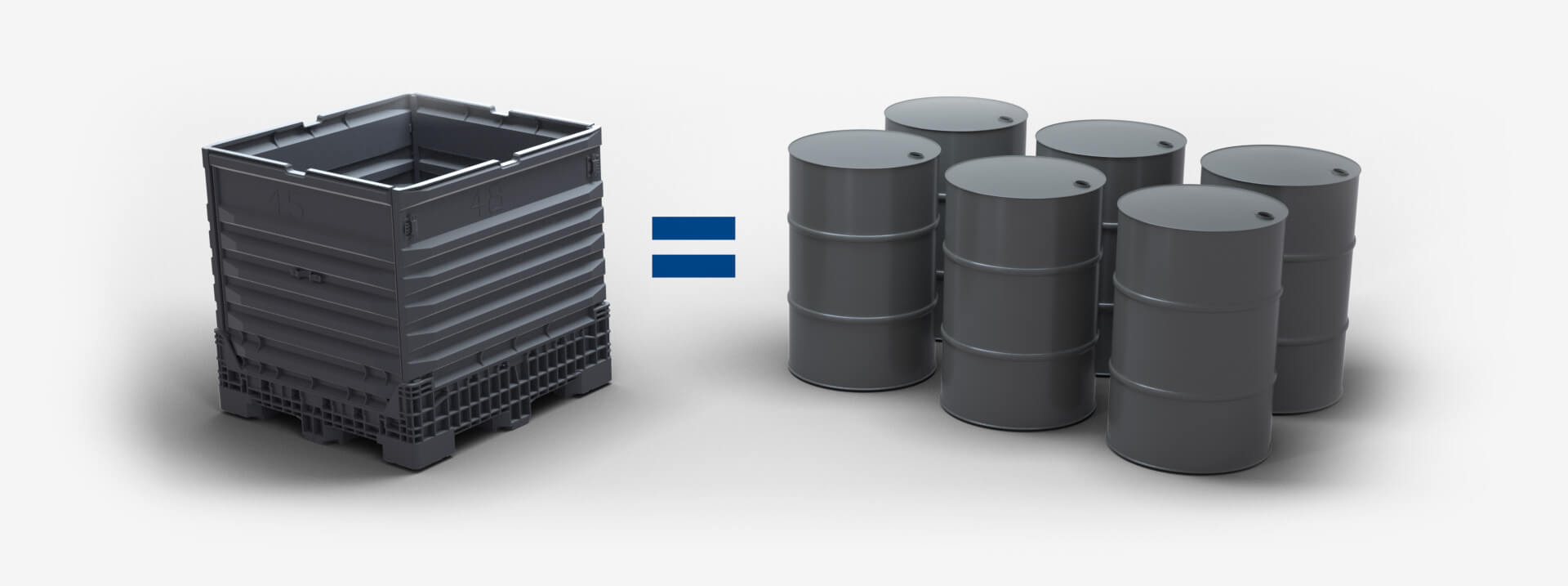
The Arena 330 Tote is compact but can still hold 330 Gallons

50% more product per pallet space compared with drums
A330 = 6 Barrels Equivalent

TECH SPECS

Volume Capacity: 330 gallons/1250 liters/44.44 cubic feet

External Dimensions: (LxWxH): 45 x 48 x 45.5 inches

Internal Dimensions: (LxWxH) 41.5 x 44.5 x 40.5 inches

Collapsed Dimensions: (LxWxH): 45 x 48 x 14.7 inches

Tare Weight: 175 lbs (73kg)

Free Stacking Height – In-use: 4 units

Free Stacking Height – Collapsed: 14 units

Return Ratio: 3.5:1 units

Expected Life (Normal Use): 10 years

CONTACT US

Got a question? We'd love to hear from you. Send us a message and we'll respond as soon as possible.

"*" indicates required fields

This field is for validation purposes and should be left unchanged.
This site is protected by reCAPTCHA and the Google Privacy Policy and Terms of Service apply.

Frequently Asked Questions

How does the A330's collapsible design lower return-shipping and storage costs?

Empty containers are dead weight on a truck and dead space in a warehouse. When an A330 is empty, it knocks down flat and the collapsed units stack far higher than they do in use, which is where the 3.5:1 return ratio comes from: about three and a half collapsed containers travel back in the footprint of one set-up unit. That means fewer trucks for empties, more floor space freed up between fills, and lower freight and storage cost per container over its life.

Can the A330 be filled from the top with thick or solid products?

Yes. With the snap-on cover removed, the A330 opens fully at the top, so it takes pastes, gels, granular solids, and other products that won’t flow cleanly through a small fill port. Product is filled into the bag-in-box liner, then the cover snaps on to protect the contents in transit. That top access is why the container handles bulk solids and viscous goods, not just free-flowing liquids.

Why use an IBC instead of drums?

An IBC consolidates into one container what would otherwise move as several separate drums, so your team fills once and discharges once instead of repeating the process across many units. Fewer containers means fewer openings and connection points where leaks or contamination can start, less manual handling on the floor, and fewer assets to clean, inspect, and track. For a plant running steady volume, that is less labor per shipment and a simpler supply chain to manage.