IBC Drain Valve Guide: How to Choose the Right Type for Your Bulk Container
Key Takeaways
- Valve type selection should be driven by liquid viscosity, regulatory requirements, and IBC liner compatibility.
- Butterfly and ball valves are the most common configurations for industrial bulk liquid applications.
- Valve-liner interface compatibility is critical to achieving maximum product recovery and minimizing residual waste.
- Food, beverage, and personal care manufacturers should specify FDA-compliant materials for all valve components.
- Routine valve inspection and scheduled maintenance are essential for protecting product integrity in reusable IBC systems.
When it comes to bulk liquid handling, the smallest components often have the biggest impact on operational efficiency. The IBC drain valve is one such component — a seemingly minor part of the system that directly influences discharge speed, product recovery, contamination risk, and overall process reliability.
For manufacturers in food and beverage, chemical processing, and personal care, selecting the right valve type is not just a procurement decision. It is a critical factor in maintaining product integrity and minimizing downtime.
Common IBC Drain Valve Types
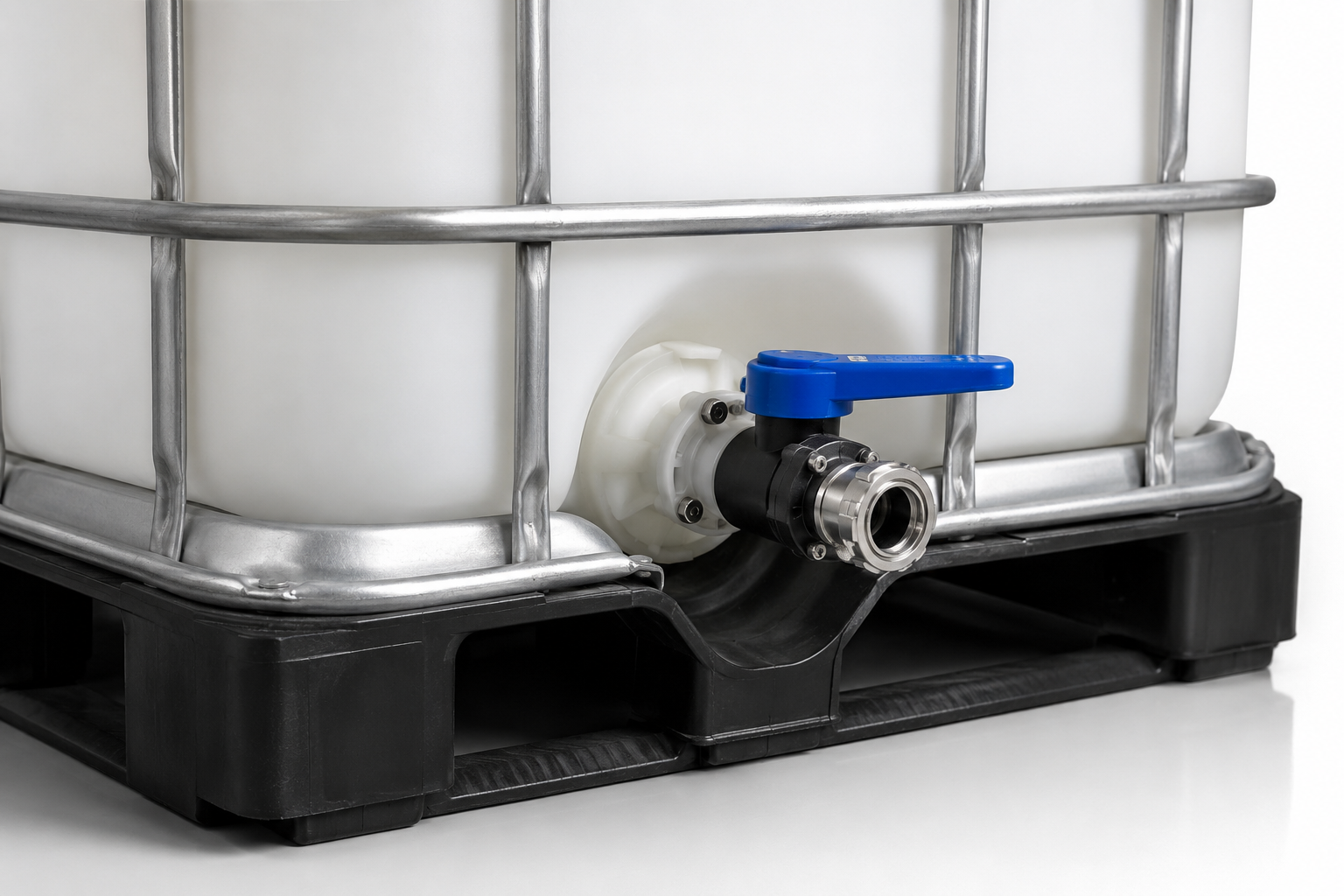
Bulk container valves come in several configurations, each suited to different applications and liquid viscosities. The most widely used types include:
- Butterfly valves — ideal for high-volume discharge of low-viscosity liquids; fast-acting and easy to automate
- Ball valves — provide a tight seal for hazardous or sensitive materials; well-suited for chemical applications
- Gate valves — used where a full-bore opening is needed; common in thick or particle-laden liquids
- Diaphragm valves — preferred in sanitary applications where contamination prevention is critical
- Camlock fittings — quick-connect/disconnect mechanisms that improve efficiency during filling and discharge
Key Selection Criteria
The right valve depends on several operational variables. Before specifying a valve type, manufacturers should evaluate:
- Liquid viscosity and particulate content — thick or chunky products require larger bore openings
- Regulatory requirements — food-grade and pharmaceutical applications often mandate FDA-compliant materials such as stainless steel or HDPE
- Cleaning and sanitation protocols — some operations require clean-in-place (CIP) compatibility
- Compatibility with IBC liner systems — valves must interface correctly with liner discharge ports to maximize product recovery
- Temperature and pressure ratings — chemical and industrial applications may subject valves to extreme conditions
Why Valve-Liner Compatibility Matters
For manufacturers using intermediate bulk containers with liner systems, valve selection becomes even more consequential. A mismatched valve and liner discharge port can result in product residual buildup, premature liner failure, and increased labor costs during discharge operations.
Arena Products engineers IBC liner systems with discharge compatibility in mind, ensuring that the liner port interfaces cleanly with common valve configurations to deliver maximum product recovery — including for highly viscous liquids. Our Air Evac® technology further supports full discharge by replacing product volume with regulated air, keeping the product and air chambers completely separate.
Maintenance and Replacement Considerations
Even the most durable drain valve will degrade over time in demanding production environments. Routine inspection of valve seats, seals, and actuation mechanisms should be part of any IBC maintenance protocol. Operators should watch for signs of leakage, stiff actuation, or residue buildup around the valve body — all indicators that replacement or servicing is needed.
When valves are used in conjunction with reusable IBC systems, a scheduled maintenance and replacement cycle helps protect both the container and the product inside it.
Contact us today to request a quote or speak with an expert!