
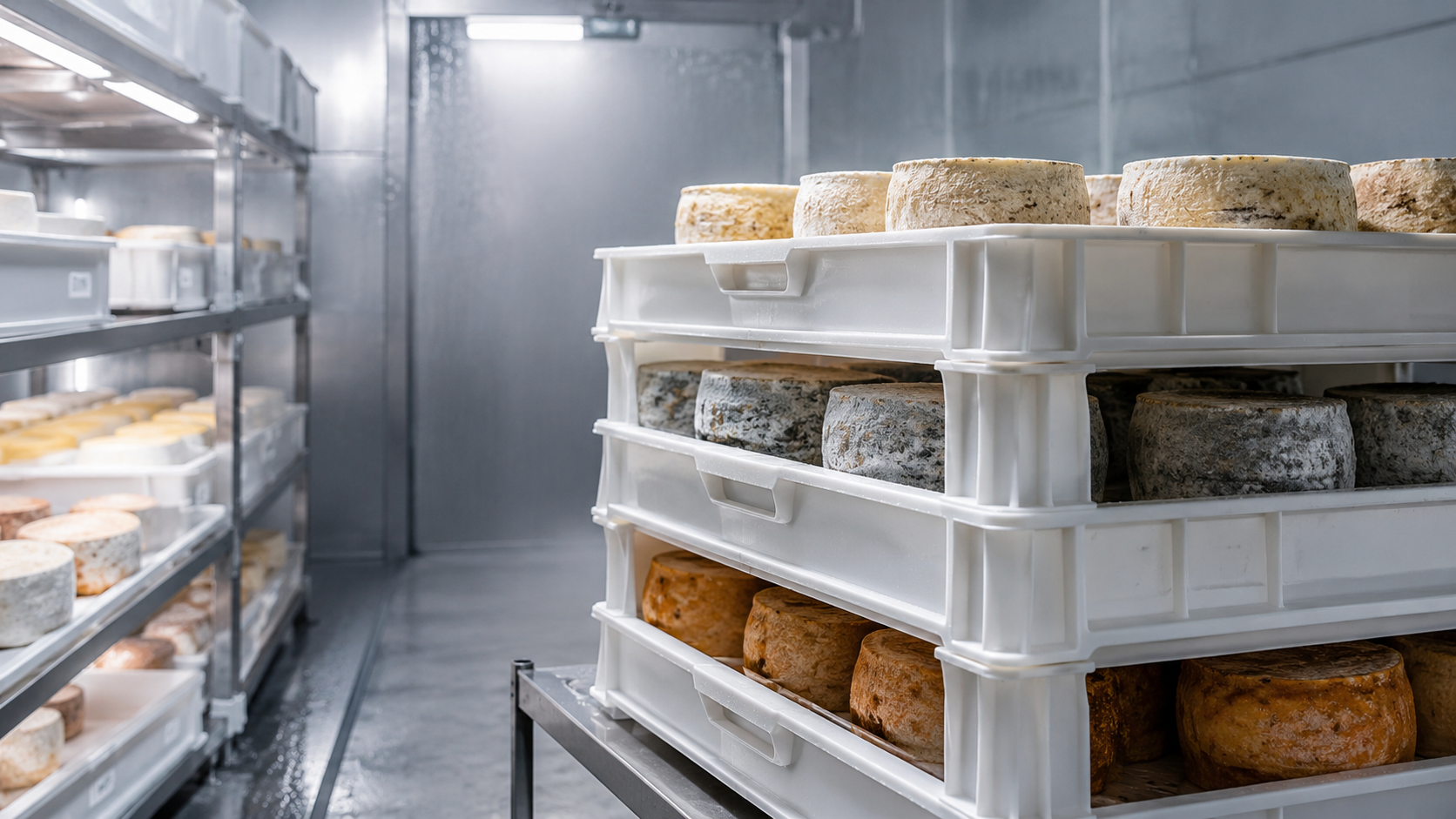
Temperature-Controlled Cheese Ripening Boxes: Best Practices for Artisan Producers
Key Takeaways
- The ripening container is a functional tool in the affinage process — its material, design, and breathability directly influence rind development and flavor outcomes.
- Different cheese styles require different ripening temperatures, meaning container and cave system choices must align with the specific product being aged.
- Food-grade, non-reactive materials are non-negotiable in ripening containers to prevent off-flavors and chemical contamination of the cheese.
- Sanitation between ripening cycles is critical to preventing cross-batch contamination in multi-variety artisan production environments.
- Scaling artisan production successfully requires standardizing both environmental controls and container systems to achieve consistent quality across larger batch volumes.
For artisan cheese producers, ripening is where the craft happens. It is the stage where carefully controlled temperature, humidity, and airflow transform a fresh curd into a complex, shelf-stable product with a defined flavor profile. The containers used during this critical phase — often referred to as a cheese ripening box — play a direct role in determining whether that transformation succeeds or fails.
What Happens During the Ripening Process
Cheese ripening, or affinage, involves enzymatic and microbial activity that breaks down proteins and fats to develop aroma, texture, and taste. The duration of ripening varies enormously — from a few weeks for fresh-style cheeses to years for aged varieties. Throughout this process, the cheese must be maintained within precise environmental parameters to promote the right microbial activity while suppressing unwanted spoilage organisms.
Temperature control during ripening is not simply about keeping cheese cold. Different cheese styles require different ripening temperatures. Most soft-ripened cheeses mature between 50–55°F, while washed-rind varieties may require slightly warmer conditions. Managing these ranges consistently — especially across larger batch volumes — requires containers and storage systems that support thermal stability rather than fighting against it.
Choosing the Right Ripening Container
The physical container used during aging directly affects moisture retention, rind development, and product handling efficiency. Artisan producers scaling from small-batch production to regional distribution need containers that perform consistently across multiple ripening cycles.
Critical container characteristics for cheese ripening include:
- Moisture-permeable design: Containers that allow controlled breathability support proper rind development and prevent excessive moisture condensation that leads to off-flavors or mold issues.
- Food-grade, non-reactive materials: Containers must not impart any flavor, chemical, or odor to the cheese. HDPE and food-grade stainless steel are the most widely used materials in commercial affinage environments.
- Stackability and cave compatibility: Containers that stack securely without trapping moisture or blocking airflow between wheels make efficient use of ripening cave space.
- Easy sanitation: Ripening containers accumulate brine, whey, and microbial residue between cycles and must be fully sanitizable without retaining odors or promoting cross-batch contamination.
Environmental Controls That Work Alongside Containers
Even the best-designed cheese ripening box cannot compensate for a poorly managed ripening environment. Artisan producers scaling their operations should invest in cave or aging room controls that complement container performance:
- Relative humidity control: Most cheese styles require 85–95% RH during ripening. Humidity that is too low dries out the rind prematurely; too high promotes unwanted mold proliferation.
- Air circulation management: Gentle, consistent airflow prevents hot and cold spots in the ripening space and supports even rind development across all surfaces.
- Temperature logging: Continuous data logging allows producers to document ripening conditions for food safety records and troubleshoot quality deviations quickly.
- Turning schedules: Containers with flat, stable bases and smooth surfaces simplify the frequent turning required during early-stage ripening without damaging the cheese body.
How Arena Products Supports Artisan Cheese Operations
Arena Products supplies food-grade reusable containers used across the spectrum of dairy and specialty food applications — from fresh curd handling through extended aging programs. Our team works with artisan producers and commercial creameries to identify the right container configuration for their specific cheese styles, production volumes, and facility layouts. If you’re scaling production or standardizing your aging room infrastructure, we’re here to help.
Contact us today to request a quote or speak with an expert!