
Bulk Liquid Egg Transport Logistics: Keeping Liquid Egg Safe from Plant to Production Line
Key Takeaways
- Pasteurized liquid egg controls Salmonella but is not sterile, so an unbroken cold chain is what protects it in transit.
- Liquid whole egg and yolk need to stay below 40°F and egg whites below 45°F, with a refrigerated shelf life of roughly one to two weeks.
- Bulk liquid egg moves by refrigerated tanker, refrigerated vat, or food-grade IBC tote with a liquid liner, and totes suit the many buyers who order less than a full tanker.
- A reusable IBC with a single-use liner protects the product, removes wash-out waste, and carries more product per pallet than drums.
- Tight scheduling, pre-cooled and monitored trailers, FIFO rotation, and clean documentation are what keep liquid egg on-spec and customers compliant.
Moving bulk liquid egg from the breaking plant to a food manufacturer’s production line is one of the more unforgiving jobs in cold chain logistics. Pasteurized liquid egg carries a short refrigerated shelf life, a low temperature ceiling, and a level of food safety scrutiny that few other ingredients face. For egg processors and the distributors who supply bakeries, sauce and dressing makers, and foodservice operators, getting liquid egg transport logistics right protects both product quality and the customer relationships that depend on consistent, on-spec delivery.
Why Liquid Egg Is a Demanding Cold Chain Product
Liquid egg is demanding because pasteurization controls Salmonella but does not sterilize the product. Spoilage organisms survive the process, so the cold chain has to do the rest of the work, and that leaves a narrow margin for error in transit.
Three realities define the challenge. The first is temperature. Liquid whole egg and yolk need to stay below 40°F, and liquid egg whites below 45°F, from the moment they leave the processor. Any sustained drift above those thresholds shortens shelf life and raises food safety risk. The second is time. Refrigerated liquid egg generally holds for roughly 7 to 14 days, and USDA guidance allows unopened product up to 7 days at 40°F or below. Every hour of temperature abuse in transit eats into that window before the product reaches a customer’s tank or mixing line.
The third is oversight. Egg products are regulated by the USDA’s Food Safety and Inspection Service under the Egg Products Inspection Act, and processing equipment follows 3-A Sanitary Standards, the same hygienic design standards used across the dairy industry. Listeria is the main post-pasteurization concern, and it is almost always tied to a processing or handling failure rather than the product itself. Clean equipment, intact packaging, and an unbroken cold chain are the controls that keep it out, and buyers increasingly expect documentation that all three held.
How Bulk Liquid Egg Moves from the Breaking Plant
Bulk liquid egg leaves the breaking plant as a refrigerated liquid and reaches users in one of three ways: insulated thermal tank trucks, portable refrigerated vats, or food-grade bulk containers such as IBC totes fitted with liquid liners. For long hauls, processors add mechanical refrigeration or cooling with liquid carbon dioxide or liquid nitrogen to hold temperature over distance.
Each path trades off volume, flexibility, and handling. Tankers move the most product, but they lock a shipment into a single destination and a full clean-out cycle between loads. Totes and vats break a load into manageable, trackable units that suit customers ordering less than a full tanker’s worth, which describes most bakeries, prepared-food plants, and foodservice distributors.
A large share of liquid egg still ships frozen, because freezing extends safe storage to about a year and removes the clock that refrigerated product runs against. Frozen distribution adds cost, thawing time, and some loss of functional quality, so processors that can move refrigerated product quickly often prefer to keep it liquid and rely on tight logistics instead.
Choosing the Right Bulk Container for Liquid Egg
The container that carries liquid egg between the processing plant and a customer’s facility shapes cold chain performance as much as the truck does. For a pasteurized liquid that has to stay cold and clean, a reusable IBC tote paired with a single-use liquid liner handles the two jobs that matter most: protecting the product from contamination and moving it efficiently.
When evaluating bulk containers for liquid egg, the criteria that carry the most weight are:
- Sanitary single-use liner: A bag-in-box liner gives each shipment a fresh, food-grade barrier and removes the wash-out, flushing, and effluent that come with rinsing tank-style containers between loads. Liners can be specified for cold or aseptic filling, which fits pasteurized liquid egg.
- Barrier protection: Liner films can be built to guard against oxygen, moisture, and UV light, helping hold product quality across the haul.
- Secure lids and discharge fittings: Liquid loads shift and surge in transit, so positive-locking lids and matched valves or fittings lower the risk of leaks and contamination at the dock.
- Pallet and trailer efficiency: A footprint that fits standard pallets fills out trailer cube and lowers freight cost per pound. A well-designed 330-gallon tote can carry roughly 50 percent more product per pallet position than drums.
- Durability across return cycles: Reusable totes that withstand repeated washing and handling over years of service cost far less per trip than single-use packaging once return logistics are in place.
- Collapsibility for return freight: Totes that knock down for the trip back cut the cost and space of returning empties to the plant.
Cold Chain and Scheduling Best Practices for Liquid Egg
Even the right container cannot rescue a poorly run cold chain. Because refrigerated liquid egg runs on a short clock, the gap between production and delivery has to stay tight, and temperature has to hold the entire way.
- Direct-load when you can: Sending product straight from the plant to the customer, without an intermediate distribution stop, cuts handling touchpoints and keeps it in primary refrigeration longer.
- Pre-cool and verify trailers: A trailer that is not pulled down to temperature before loading puts the product behind from the first mile. Require continuous temperature monitoring from carriers and audit those records on a routine basis.
- Schedule deliveries for low-traffic windows: Night and early-morning deliveries shorten dock waits and limit how long product sits in ambient temperature during unloading.
- Run first in, first out: Liquid egg should move on a strict FIFO basis at every stop, so the oldest product ships first and nothing ages out in storage.
- Keep the paper trail: Cold chain records, certificates of analysis, and on-time, in-full delivery data are increasingly conditions of supply for food manufacturers and foodservice distributors working under SQF or BRCGS food safety programs.
How Arena Products Supports Liquid Egg Logistics
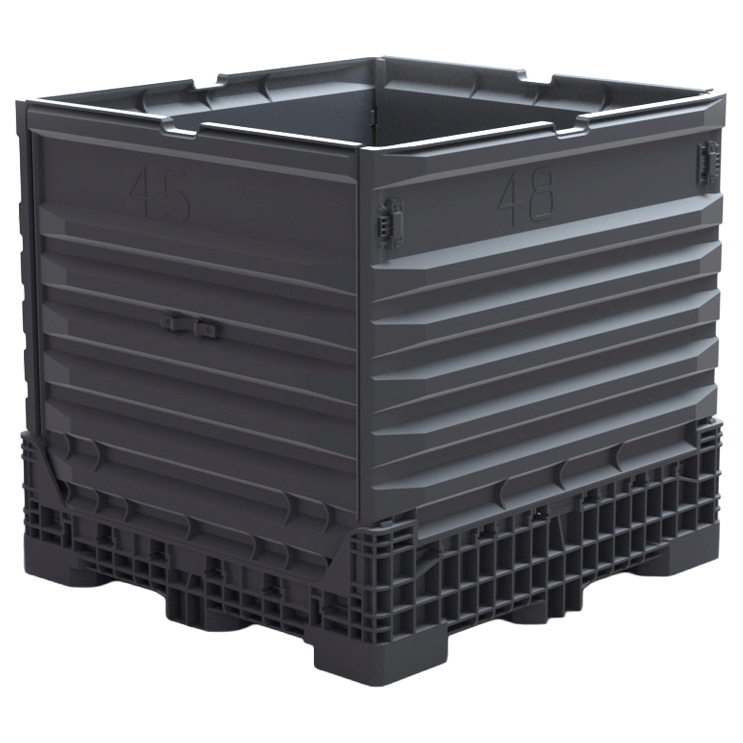
Arena Products engineers reusable bulk containers built for cold, sanitary liquid transport. The Arena 330 Shipper is a collapsible, all-plastic IBC that holds up to 330 gallons, sets up and knocks down in under 30 seconds, and stacks four high in use to make the most of plant and trailer space. Paired with Arena liquid liners, the bag-in-box system supports cold and aseptic filling and accepts barrier films where product protection calls for them.
For processors that would rather not own and manage a fleet of containers, the Concierge pooling and logistics program handles cleaning, positioning, and return, so teams can scale capacity up or down without tying up capital. Containers are available for sale or lease.
Contact Arena Products to request a quote or talk through a container program built around your liquid egg operation.